
Romalda Bishop Spalding was passionate about making sure every child could read.
After realizing that her exceptional preparation was not enough to teach all children to read and write successfully, she sought guidance and training from the distinguished neurologist Dr. Samuel T. Orton, a leader and specialist in helping dyslexic and other children with learning difficulties. As a result, Romalda Spalding created a method that empowered children to become fluent and thoughtful readers and writers and she established The Spalding Education Foundation in 1986.
The purpose of introducing the Spalding Education Foundation (now Spalding Education International) to the world was to perpetuate her method and to transmit the principles and procedures that, to this day, make THE SPALDING METHOD® so effective.
Spalding Education International (SEI) is a non-profit corporation. To promote and advance the method further, we offer courses and online components to certify, teachers, and instructors in THE SPALDING METHOD®. We also provide SEI Accreditation and onsite staff development for schools, and districts.
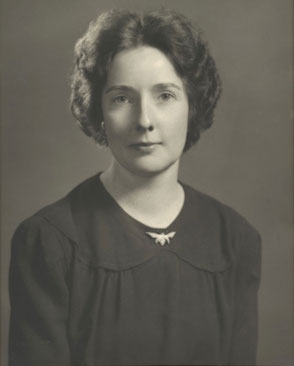
Birthplace and Date
Santa Rosa, Honduras on February 1, 1899
Place and Date of Death
Honolulu, Hawaii on January 29, 1994
Education
Additional studies
Publications
Special Honors and Awards
Professional and Honorary Societies
Classroom teacher, Community School, St. Louis, Missouri
Classroom teacher, Katherine Branson School, Ross, California
Classroom teacher, Birch Walthen School, New York City
M.A. Columbia University
Classroom teacher, Bronxville Public Elementary Schools, Bronxville, New York
Taught a boy from the middle of his kindergarten year through second grade, directly under the meticulous supervision of Dr. Samuel T. Orten. Later taught several older students under his direction.
Shady Hill School, Cambridge, Massachusetts: Teacher of Students with language problems from third through ninth grade. Taught each year groups of graduates from Smith, Vassar, Radcliffe, Bryn Mawr and other girls’ schools. These girls spent a year at Shady Hill School in order to learn to teach. Worked with physicians of Children’s Hospital at Harvard Medical School.
Marriage to Commander Walter T. Spalding
Tutoring at two private schools and consulting in Hawaii
Member of Summer School Staff at Chaminade University of Honolulu
Consultant in reading to the Superintendent of Catholic Schools for state of Hawaii
Taught hundreds of individual students of all ages
Summer Instructor at Assumption College, Worcester, Massachusetts
Instructor of approximately 120 college credit Spalding classes of teachers and parents in mainland states, Hawaii, Alaska, and Canada.
Spalding consultant to more than 50 schools in mainland states and Hawaii; certified first 16 Spalding Teacher Instructors.
Deceased